
 EN
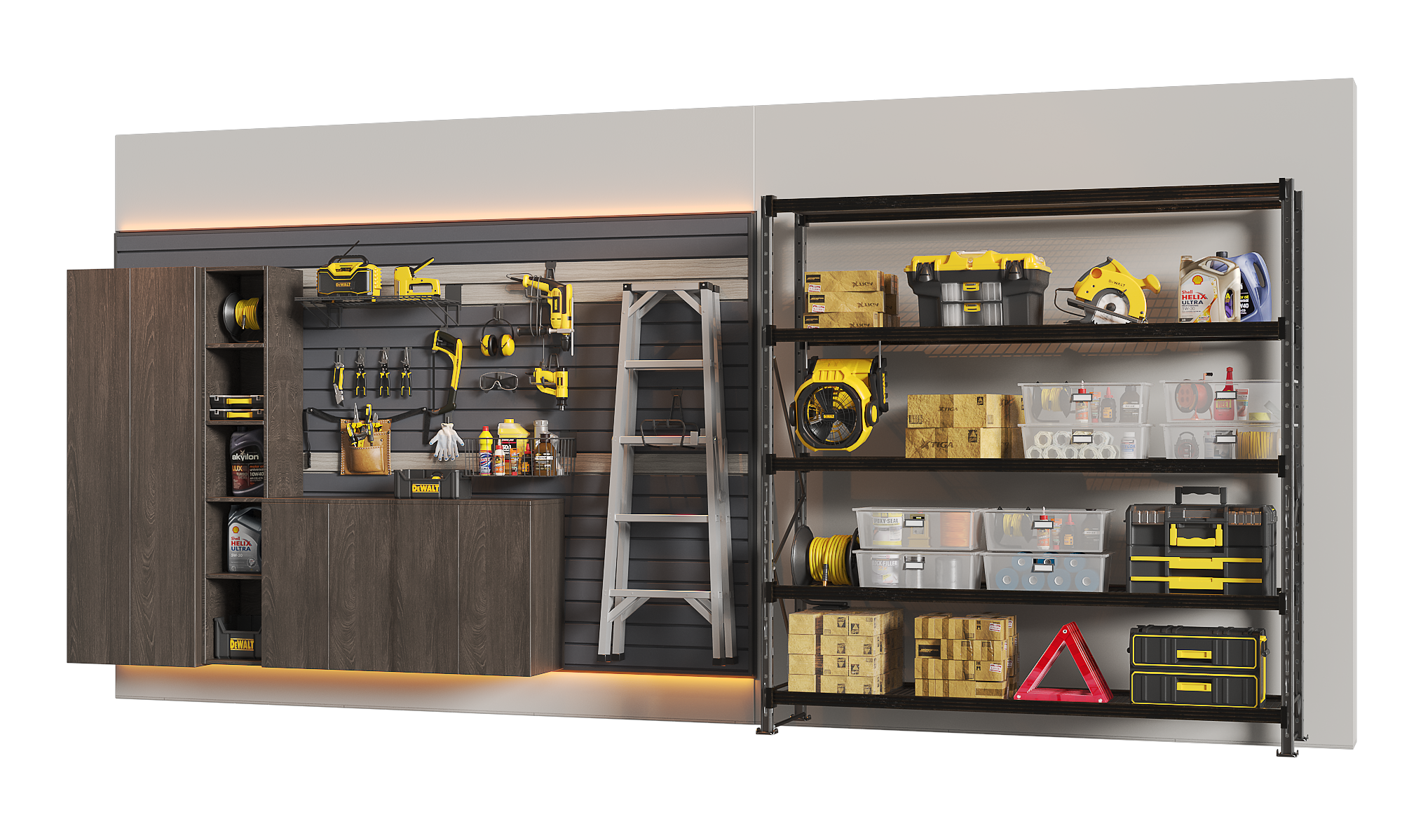
2026 Market Context
Global garage renovation is moving toward organized, multi-use rooms rather than isolated storage walls. Buyers want a system that supports tools, bicycles, fitness equipment, and retail-style presentation while reducing installation time. In 2026, the strongest B2B specification balances appearance with measurable performance: repeatable profiles, tested loads, stable weatherability, modular accessories, reliable packaging, and a factory capable of OEM or ODM execution.
Core WPC Engineering Parameters
Specify the full assembly, not just a decorative board. Review panel thickness, width, groove geometry, density, skin construction, surface hardness, color tolerance, thermal expansion, moisture behavior, and fire documentation. Micro-foamed WPC can provide a lighter, stable alternative to moisture-sensitive MDF when the formulation and processing are controlled. Ask for technical drawings, tolerance ranges, installation gaps, recommended fasteners, and batch test records.
A practical specification should state panel load separately from point-hook load. A 40kg panel rating is meaningful only with defined span, anchor spacing, wall substrate, and load direction. Locking hooks may be rated to 30kg per point, but dynamic bicycle or ladder loads require a complete assembly review. Request static and repeated-load test methods, failure criteria, and approved accessory combinations.
Load Mechanics and Installation
Load transfers from the accessory into the slat groove, panel, fasteners, substrate, and finally the building structure. Eccentric or biting locking interfaces help control sliding and rotation, but they cannot compensate for weak framing or incorrect screw spacing. For procurement, require a section drawing showing the engagement depth and the recommended fixing schedule. Include expansion allowances, level references, corner detailing, and inspection points in the installation manual.
- Confirm the substrate and structural framing before selecting panel spans.
- Verify groove dimensions and accessory compatibility with production samples.
- Use the specified fasteners and maintain the approved fixing centers.
- Perform a gradual proof load before opening a commercial installation.
OEM and ODM Factory Capability
A qualified B2B manufacturer should support more than a standard catalog. OEM capability includes private-label packaging, artwork control, barcode and carton marks, profile or color selection, and documented quality checkpoints. ODM capability may include new trim profiles, accessory geometry, sample tooling, finish development, and performance validation. Ask who owns tooling, how revisions are controlled, and which approvals are required before mass production.
Evaluate extrusion consistency, co-extrusion skin quality, color repeatability, surface protection, incoming-material control, and final inspection. A factory audit should review calibration records, test equipment, nonconformance handling, traceability, and corrective-action response. Approve a golden sample and a signed technical data sheet before placing the production order.
MOQ, Packaging, and Container Planning
MOQ should be discussed by panel color, profile, accessory, and packaging configuration—not only by total square meters. Consolidating a project into mixed cartons can reduce flexibility if the packing list is unclear. Confirm panel length, carton dimensions, pallet limits, container loading pattern, gross weight, spare-rate policy, and moisture protection. Corner guards, separators, and reinforced cartons help reduce edge damage during ocean transport.
Before shipment, request production photos, carton counts, packing-list reconciliation, and an inspection release. For export orders, align commercial invoice, packing list, HS classification, marks, and destination requirements early. A load plan that protects long panels and keeps accessory cartons accessible can prevent costly claims and installation delays.
B2B Buying Checklist
- Technical drawings with tolerances and approved accessories.
- Panel, hook, substrate, and fixing load data.
- Samples showing color, grain, groove fit, and trim details.
- OEM/ODM scope, tooling ownership, MOQ, lead time, and warranty.
- Quality plan, inspection method, packaging specification, and replacement policy.
- Container loading plan, export documents, and shipment photos.
FAQ
What is the most important 2026 specification? Define the complete load path and installation conditions rather than relying on a headline panel number.
How should an OEM supplier be compared? Compare controlled samples, test evidence, process capability, communication, MOQ, packaging, and corrective-action history.
Can colors and profiles be customized? Often yes, subject to tooling, quantity, finish capability, and approved samples.
How can container damage be reduced? Confirm carton engineering, edge protection, palletization, moisture control, and a documented loading inspection.
Conclusion
The best 2026 WPC slatwall purchase is an engineered system and a controlled supply program. By validating material parameters, load mechanics, OEM/ODM capability, MOQ, and export packaging before production, B2B buyers can reduce installation risk and build a scalable commercial storage platform.